
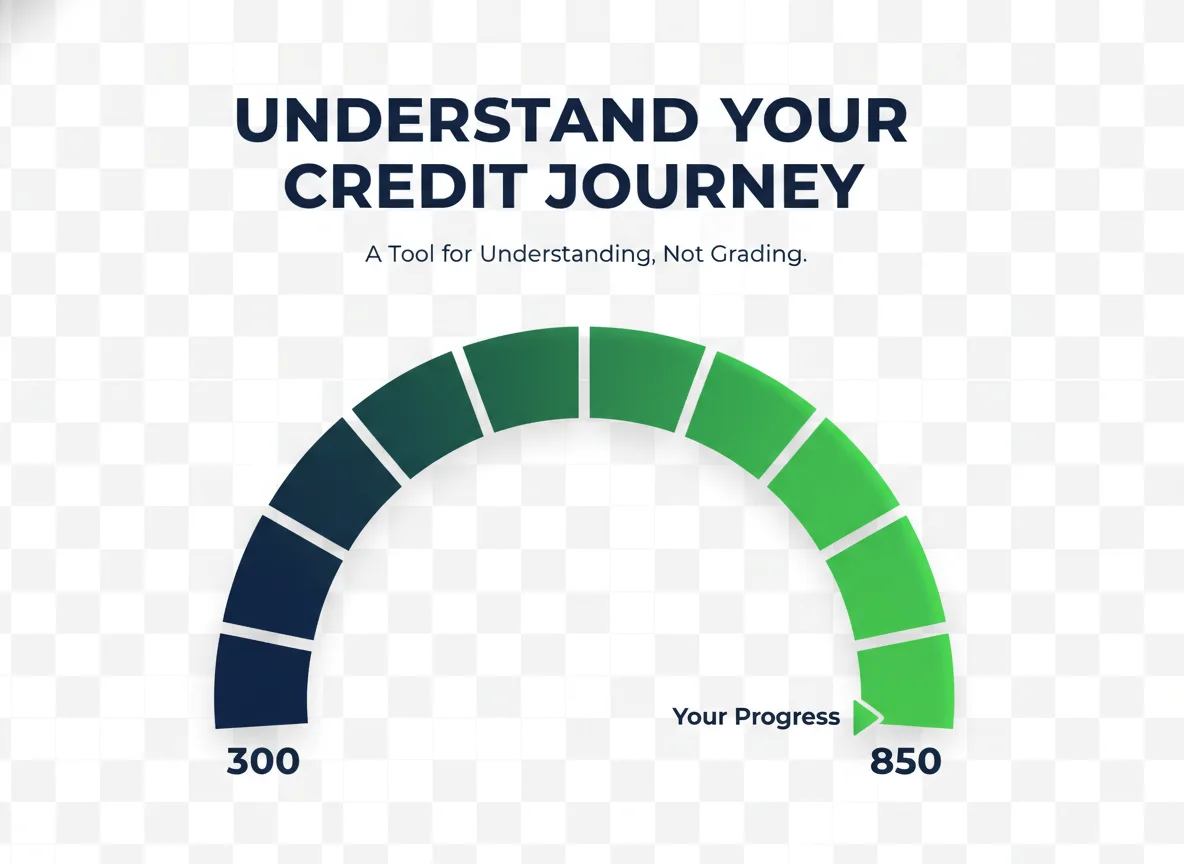
If you're asking yourself, "What credit score do I need for a car loan?" You are not alone. It's one of the most common questions we hear from people who need reliable transportation but worry their credit history might hold them back.
Here's the good news: there is no universal minimum credit score required to get a car loan. Different lenders have different requirements, and many specialize in working with people who have credit challenges. In this comprehensive guide, we'll break down exactly what you need to know about credit scores and auto financing in 2026. No jargon, no judgment, just honest answers.
The Truth About "Minimum" Credit Scores for Car Loans
Let's address the elephant in the room: you've probably seen articles claiming you need a 660, 620, or some other specific number to get approved for a car loan. The reality is more nuanced and more hopeful.
There is no industry-wide minimum credit score for auto loans. Each lender sets their own criteria. Traditional banks might want 700+, while credit unions often work with 600+, and specialized subprime lenders work with scores well below 580.
What matters more than hitting a magic number is finding the right lender for your situation. That's exactly what we help with at Car Approval Pro—connecting you with lenders who specialize in your credit profile.
Why Credit Score Requirements Vary So Much
Lenders base their minimum requirements on their risk tolerance and business model. A traditional bank makes money by lending to "safe" borrowers at low interest rates. A subprime lender makes money by serving borrowers others will not, at higher rates that account for the increased risk.
Neither model is wrong. What matters is finding a lender whose criteria match your situation.
Credit Score Tiers: What Your Number Really Means for Auto Loans
While there's no universal minimum, understanding where you fall on the credit spectrum helps set realistic expectations. Here's how lenders typically view different credit score ranges:
750+ (Prime/Excellent Credit)
If your score is 750 or higher, congratulations! You're in the prime borrower category. You'll qualify for:
- The lowest available interest rates (often 5-8% APR in 2026)
- Approval at virtually any lender
- Flexible loan terms (60-84 months)
- Little to no down payment requirements
- Access to special manufacturer financing offers
670-749 (Near-Prime/Good Credit)
This range puts you in solid territory. Most mainstream lenders will approve you, though your rates will be higher than prime borrowers:
- Interest rates typically range from 8-13% APR
- Wide variety of lender options
- May need a modest down payment
- Some promotional rates may be available
580-669 (Subprime/Fair Credit)
This is where many of our customers at Car Approval Pro fall, and where we do our best work.
If your score is in this range, traditional banks may decline you, but plenty of options exist:
- Interest rates typically range from 13-21% APR
- Subprime lenders specialize in this credit tier
- Down payment helps significantly (more on this below)
- Stable income becomes more important than your score
- Vehicle selection may be limited to reliable, newer models
The key in this range is working with lenders who understand that a credit score is just part of your story. Learn more about how bad credit auto loans work.
Below 580 (Deep Subprime/Poor Credit)
Yes, you can still get approved with a credit score below 580. It requires finding the right lender and often demonstrating strength in other areas:
- Interest rates typically range from 19-25%+ APR
- Larger down payment often required ($1,000+)
- Proof of stable income is essential
- Some lenders specialize exclusively in this tier
- May be limited to specific vehicle types
If you're in this range, don't give up. Many people in this situation have successfully financed vehicles and used the loan to rebuild their credit over time.
What Lenders Actually Look At (Beyond Your Credit Score)
Here's something that surprises many applicants: your credit score is just one factor lenders consider. In subprime lending especially, other factors often carry equal or greater weight.
Income and Employment Stability
Lenders care deeply about whether you can make the payments today, not three years ago when your credit took a hit. Strong income signals can offset a weaker credit score.
What lenders look for:
- Consistent employment (6+ months at current job is ideal)
- Verifiable income through pay stubs or bank statements
- Sufficient income to cover the payment (usually want your car payment under 15-20% of gross monthly income)
If you've been at the same job for a year or more, that stability can significantly boost your approval odds even with a lower credit score.
Down Payment
Money down does two important things: it reduces the lender's risk immediately, and it demonstrates your commitment to the loan.
Here's how down payment affects approvals:
- $0 down: Possible in prime/near-prime tiers; difficult (but not impossible) with challenged credit
- $500-$1,000: Shows commitment; may unlock approval for borderline applications
- $2,000+: Significantly improves approval odds and may lower your interest rate
- 10%+ of vehicle price: Ideal for subprime borrowers
Even if you're told "low down payment," having some cash ready can be the difference between approval and denial.
Debt-to-Income Ratio (DTI)
This measures how much of your monthly income goes toward debt payments. Lenders want to ensure you have room in your budget for a car payment.
To calculate your DTI:
- Add up all monthly debt payments (rent/mortgage, credit cards, student loans, other car payments)
- Divide by your gross monthly income
- Multiply by 100 for a percentage
Most auto lenders want your total DTI (including the new car payment) to stay under 45-50%. Use our auto loan calculator to see what payment fits your budget.
Time at Current Residence
Stability matters to lenders. If you've lived at your current address for 1+ years, that's a positive signal. Frequent moves can raise concerns about stability and make it harder to track down borrowers if payments stop.
If you've moved recently, be prepared to provide your previous address and explain the move (new job, bought a house, etc.).
The Vehicle Itself
Lenders also evaluate the car you want to finance. They prefer:
- Newer vehicles (typically under 7-10 years old)
- Lower mileage (under 100,000 miles)
- Reliable brands with good resale value
- Vehicles that can serve as adequate collateral
This isn't about judging your taste. It's about ensuring the car will maintain enough value to secure the loan and remain driveable so you can get to work.
How to Improve Your Auto Loan Approval Odds
Whether you're applying today or planning for next month, here are proven strategies to strengthen your application:
1. Know Your Credit Score Before Applying
Check your credit score through a free service like Credit Karma or your bank's app. This helps you understand which tier you fall into and set realistic expectations. It also lets you spot errors that might be dragging your score down.
2. Save for a Down Payment
Even a few hundred dollars helps. If you can save $1,000-$2,000, you'll dramatically improve your options. Consider:
- Setting aside tax refund money
- Selling items you no longer need
- Picking up extra shifts or side work
- Using a trade-in vehicle as down payment
3. Gather Your Documentation
Being prepared speeds up the process and shows lenders you're serious:
- Recent pay stubs (last 30 days)
- Proof of residence (utility bill in your name)
- Valid driver's license
- List of personal references (names and phone numbers)
4. Consider a Co-Signer
If you have a family member or friend with good credit who's willing to co-sign, this can significantly improve your approval odds and interest rate. Just remember: they're on the hook if you don't pay, so only ask if you're confident you can make every payment.
5. Be Realistic About What You Can Afford
Lenders appreciate applicants who have realistic expectations. Aiming for a $15,000 reliable sedan shows more financial awareness than insisting on a $45,000 truck. Use our payment calculator to find a price range that fits your budget.
6. Don't Apply Everywhere
Multiple credit inquiries can hurt your score. Instead of applying at 10 different dealerships, work with a service like Car Approval Pro that can match you with appropriate lenders with a single application. Start your application here.
Common Myths About Credit Scores and Car Loans
Myth: You Need a 700+ Score to Get Approved
Reality: Thousands of people with scores in the 500s and 600s get approved every day through subprime lenders.
Myth: Applying for a Car Loan Will Destroy Your Credit
Reality: Credit inquiries within a 14-45 day window for auto loans are typically counted as a single inquiry by scoring models. The temporary dip is usually 5-10 points and recovers quickly.
Myth: Bankruptcy or Repossession Means No Car Loan Ever
Reality: Many lenders specialize in post-bankruptcy and second-chance financing. You may need to wait a few months after discharge and demonstrate stable income, but approval is possible.
Myth: You Should Wait Until Your Credit Improves
Reality: If you need transportation for work or family obligations, waiting isn't always practical. Plus, successfully paying an auto loan is one of the best ways to rebuild your credit score over time.
Your Next Steps: Getting Approved Today
If you need a car and you're worried about your credit score, here's the truth: your situation is more common than you think, and there are lenders who want to help.
At Car Approval Pro, we work with a network of lenders who specialize in all credit situations, from prime to deep subprime. Our auto finance application takes just a few minutes, doesn't require your Social Security number initially, and gets you matched with lenders suited to your profile.
Ready to see your options? Start your free application now. There's no obligation, and you'll know within 24 hours what's possible for your situation.
You don't have to have perfect credit to get reliable transportation. You just need to find the right path forward, and we're here to help you find it.
Frequently Asked Questions
Can I get a car loan with a 500 credit score?
Yes, it's possible to get approved with a 500 credit score through subprime lenders who specialize in deep subprime financing. You'll likely need a down payment, proof of stable income, and may face higher interest rates. The key is applying with lenders who work with your credit profile rather than traditional banks.
Will applying for a car loan hurt my credit score?
There may be a small, temporary dip of 5-10 points from the credit inquiry. However, credit scoring models typically count multiple auto loan inquiries within a 14-45 day period as a single inquiry. The minor impact recovers within a few months, and successfully paying your auto loan will improve your credit over time.
What's the difference between prime and subprime auto loans?
Prime auto loans are offered to borrowers with good to excellent credit (typically 670+) and feature lower interest rates. Subprime auto loans serve borrowers with lower credit scores or credit challenges, with higher interest rates to offset the lender's increased risk. Both can get you into a reliable vehicle—the main difference is the cost of borrowing.
How can I lower my interest rate with bad credit?
Several strategies can help lower your rate: put more money down, choose a less expensive vehicle, show strong income stability, get a co-signer with good credit, or consider a shorter loan term. Also, shop around—rates vary significantly between lenders, and applying through Car Approval Pro helps you compare options without multiple credit inquiries.